
McDonald’s: can fast food be sustainable and profitable?

With animal agriculture increasingly recognised as the largest contributor to greenhouse gas emissions, will McDonald's make meaningful changes to its supply chain and business model?
Should beans replace beef?
McDonald’s – the largest fast food restaurant in the world (1) – has been offering affordable, consistent burgers to consumers since the 1950s. Whilst their menu has expanded, burgers remain their most iconic product.
However, they are under threat. Consumers are increasingly educated on the detrimental impact of animal agriculture on the environment, particularly the production of beef (2). Animal agriculture is responsible for 18% of greenhouse gas emissions, more than the combined exhaust emissions from all transportation (3).
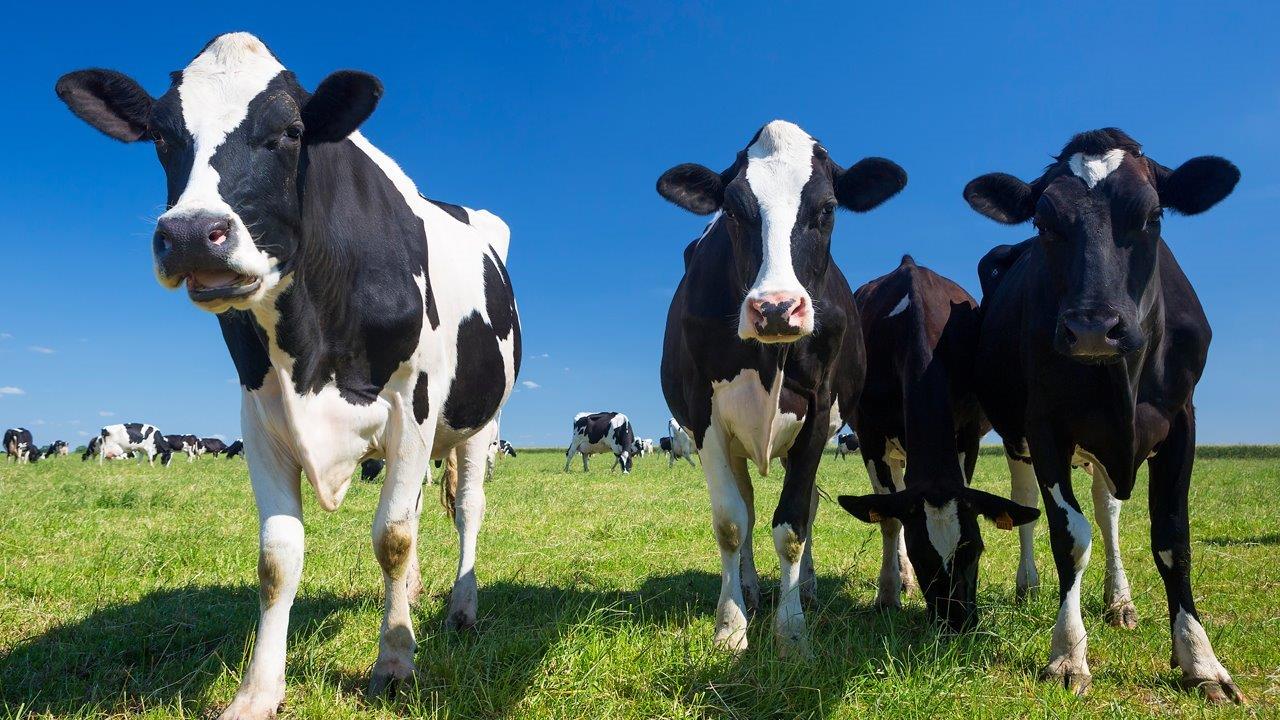
For example, cows reared in the Amazon are fed beans which they in turn convert to meat for humans to eat. In the process, the cows emit methane (a greenhouse gas more potent than CO2) and consume more calories in beans than they yield in meat. In short, it would be far more efficient for humans to eat the beans themselves.
A recent study suggested that if all Americans substituted beans for beef, America could come close to meeting its 2020 greenhouse emission goals, pledged in 2009 (4). By swapping one 5oz steak a week for a bean based meal, an individual would reduce their annual carbon dioxide emission by 331kg, equivalent to 36.7 gallons of gas or a ~5% reduction in home electricity usage (exhibit 1).


Exhibit 1: Annual emissions if a 5oz steak is replaced with vegetables once a week (5)
Swapping beans for beef is the single most effective change an individual could make to reduce their carbon footprint and therefore the most important environmental factor in McDonald’s supply chain – others include use of palm oil, disposable packaging, and deforestation for chicken feed.
As one of the largest purchasers of beef globally (McDonald’s purchases 2.5% of all the beef produced in the European Union alone (6)) McDonald’s is faced with a challenging dilemma: how to source beef sustainably and continue to provide their customers with inexpensive and consistent burgers.
Leading change?
McDonald’s is using its enormous purchasing power to promote sustainable beef.
In 2012 McDonald’s founded the global roundtable for sustainable beef (GSRB), with a mission to: “advance continuous improvement in sustainability of the global beef value chain through leadership, science and multi-stakeholder engagement and collaboration” Their vision is to make sure “all aspects of the beef value chain are environmentally sound, socially responsible and economically viable”(7).
McDonald’s has also committed to eliminating deforestation from its beef supply chain by 2020 and pledged to source a portion of its beef from sustainable suppliers in its top 10 markets (over 85% of its beef volume), without specifying what portion that will be (6).
In the medium to long-term, McDonald’s has launched many “signature programmes” in Canada, Brazil, and the US to implement the GSRB principles. The US program has two primary initiatives: an attempt to measure beef sustainability through the entire supply chain and a $4.5 million matching grant program run by a group of researchers to test grazing practices that can lead to a negative carbon impact.
The Canadian pilot program, concluded in 2016, focused on recognizing and spreading best practices (e.g. in well-managed grazing and animal welfare) and verifying sustainable suppliers. As of June 2016, they had verified 144 sustainable operations and purchased a portion of their beef from them (8).
It is enough?
Of course, their leadership towards sustainable sourcing is driven by self-interest. Not only is beef arguably their most vital ingredient but McDonald’s products have suffered extreme scrutiny over the past decade and they are wise to get ahead as consumer pressure grows.
But how genuine are their efforts? Are they really aiming to make beef truly sustainable if it means higher prices? How far can they negate the environmental impact of high-volume consumption of cheap beef whilst sustaining and growing their profits?
First, we need to see solid goals and firm commitments. McDonald’s is lacking a definition of sustainable beef and a clear commitment on the proportion of their beef that will be sustainable by 2020.
Second, McDonald’s need to use their social power to influence consumers to not only reduce the strain on their supply chain but also to save the planet. They should be educating the consumer on the harm caused by beef consumption and incentivizing them to buy products with reduced beef (see The Blended Burger Project’s mushroom concoction (9) ), alternative offerings or smaller portions – McDonald’s do not even have a veggie burger on their US menu. Without increasing prices on pure beef products, the consumer has no incentive to change their behaviour.
How realistic is it to expect a company to influence consumer behaviour if detrimental to their core consumer product offering?
Given that McDonald’s signature product is derived from an animal which emits large volumes of methane gas, can they really make their beef supply chain from being detrimental to the environment?
Word Count: 799 words
References
- “Quick service restaurant chains ranked by revenue worldwide in 2016”, Statista, 2017, , accessed November 12, 2017.
- “The Triple Whopper Environmental Impact of Global Meat Production”, Time, December 16, 2016, , accessed November 12, 2017.
- “Cowspiracy: The Facts”, Cowspiracy, accessed November 12, 2017.
- “If Everyone Ate Beans Instead of Beef”, The Atlantic, August 2 2017, , accessed November 10, 2017.
- “Here’s how much giving up beef helps – or doesn’t help – the planet”, The Washington Post, July 20, 2017, , accessed November 10, 2017.
- “McDonald’s is exploring a new menu item: Sustainable Beef”, Fortune, February 27, 2017, , accessed November 10, 2017.
- “Who we are are: GRSB Vision”, Global Roundtable for Sustainable Beef, , accessed November 10, 2017.
- “Beef sustainability in Canada, Brazil, the U.S., Australia and New Zealand”, McDonalds, 2016, , accessed November 12, 2017.
- “Blender Burger Project”, James Beard Foundation, , accessed November 10, 2017.
I would argue that many people globally do not care about the environmental sustainability of beef and without legislative pressure, McDonalds has little incentive to focus on sustainability unless customers move away from beef completely. There is a higher barrier cost-wise for sustainable beef, as much of the supply chain is through fragmented farms and often the beef making processed is not vertically integrated, meaning moving multiple layers of businesses into the sustainable model. Potentially focusing on consumer preferences (similar to what happened to chicken) is the best way for the world to get more sustainable beef?
On the surface, it appears very odd that McDonald’s doesn’t offer a veggie burger. In fact, conversion of only a few percentage points of would-be buyers of a beef sandwich to a veggie burger would be a dramatic impact given the numbers you cite above. However, reality is far different. In areas where individuals are more likely to purchase veggie burgers (urban areas), there is an abundance of more palatable alternatives nearby. Second, in 2011, when McDonalds launched a veggie burger, they sold only “4 per day” according to then-CEO Don Johnson. That said, they recently launched a McVeggie in Finland on a trial basis (perhaps customer tastes have shifted enough in the last 6 years).
In a broader context, I believe that McDonalds needs to first fix their supply chain (orient towards sustainability) before moving towards customer education. It would be an odd play to attack the environmental sustainability of a leading product they offer. Rather they should adjust their supply chain and then use an environmental angle as an attack on the competition (as a 2.5% consumer of EU beef they can set a trend from a position of superiority).
While I agree that McDonald’s efforts to date are more of a publicity stunt than a commitment to sustainability, I would also argue that adding a bean-based burger to the menu would not significantly change consumer purchasing behavior. While McDonald’s might be able to attract more vegetarians, the only way to make a significant impact on the environment would be to convert carnivorous consumers and subsequently produce fewer meat-based burgers. As a vegetarian, I have shared many bean-based burgers with meat-eating friends/family and I can confidently say they would never order it on their own, let alone order it at McDonalds.
Several companies have attempted to bridge this gap – such as Impossible Foods and Beyond Meat – by creating soy and plant-based burgers that are nearly indistinguishable from meat. As such, I believe that McDonald’s could best drive change by partnering with one of these companies or by developing their own version (similar to Chipotle’s introduction of ‘sofritas’) so that consumers don’t have to sacrifice taste.
Great fact base for the paper, very interesting to read! I think the author touches on the core of challenge in the questions she is raising at the end of the paper. The company clearly has a responsibility to source sustainable beef and we should expect large multinationals to help us “save the planet”. However, the core of the problem is consumer preferences for beef. If we cannot change this, anything McDonald’s tries to do will be off-set by competition taking market share because of shrinking margins and lower ability to compete. There will always be a fast food chain that purely looks at consumer preferences.
Overall, climate change is a typical free-riders problem that needs to be solved through government intervention. The free market cannot solve the problem, because it cannot price externalities effectively. Hence 2 proposals – First, calculate the real cost of beef (including externalities, such as greenhouse gas emissions and eventual harm to the planet) and levy taxes so that consumers make “real” choices between beans and steak vs. today. Second, increase education around the effects of eating beef, starting in pre-school.
I enjoyed the parallels to the IKEA sustainability case in this article. However, unlike our kind and responsible Swedish furniture overlords, I do not believe that McDonald’s will fundamentally alter its business model to deliver the type of climate change impact required. I agree that further regulatory action is required to drive up the price of beef and pass through the true cost of beef consumption on to both beef sellers and consumers. However, I do think that there is also a positive silver lining in that consumers are becoming more educated on the detrimental impacts of red meat overconsumption, and on the environmental impact of cattle farming. According to the WHO organization, US beef consumption peaked in the 1970s, and chicken (a more environmentally preferable meat) consumption has doubled since then. The real greenhouse gas battle will be fought in China, India, and emerging markets in the east as they adopt the “western” trend of heavy meat consumption.
I also enjoyed the parallels to the IKEA sustainability case, as Oswald mentioned above. While I agree with him that Mcdonald’s is less likely to alter its business model compared to IKEA, I think a bigger hurdle lies with the lack of consumer awareness. Most of the consumers can easily associate the IKEA furniture with trees; they understand that the company cuts down trees to make the wood furniture, damaging the environment. With McDonald’s, the link between beef and climate change is not as obvious. I don’t think most of McDonald’s consumers would know how harmful the methane emitted from cows is to the environment. They wouldn’t necessarily think of beans and the supply chain when they look at beef burgers. This would be worse in many developing countries, where the consumer awareness of sustainability is not as widespread. Thus, I think McDonald’s is under less pressure to be proactive on the sustainability front. I agree with Eliza that, ideally, McDonald’s should educate consumers, but they lack incentives. I think the governments should provide incentive, whether through a tax break or subsidy, so that they can also meet their commitments to fight climate change.
It would be rational for a company that’s existed as long as McDonald’s to think through how it can mitigate the impact of climate change, given it will inevitably be detrimental to their supply chain (and their bottom line) in the long run. While it’s true that the bulk of their customers do not care about the environmental effects of their beef consumption, one could argue that people will probably begin to care, with time. It’s probably not likely that a multinational fast-food behemoth can shift consumer behavior towards reduced beef consumption, it is wise to shift their core offering (and/or have an alternative solution ready) for when customer demand shifts on its own.